
Emirates A380 Wake Turbulence Rocks Eurowings Jet, Injuring Five Near Sarajevo
Eurowings A320 wake turbulence, Emirates A380 incident, Sarajevo aviation accident 2026, flight EW635, wake turbulence injuries, A380 vortex, ICAO separation standards, 30 May 2026 plane incident
NEWS
Captain James Carter
6/2/20262 min read


A Routine Climb Turns Violent
Eurowings Flight EW635, an Airbus A320-200 (D-AEWS), was flying at 36,000 feet close to Sarajevo on May 30, 2026. It was approved by ATC to ascend to 38,000 feet. But 7.6 nautical miles ahead, an Emirates A380-800 (flight EK1) was already at that level.
The A320 entered the strong wake turbulence of the A380 as it ascended through 37,600 feet. Before pilots regained control, the aircraft started an uncontrolled descent at a speed of up to 3,000 feet per minute.
Reference: ICAO Wake Turbulence Separation Standards (Doc 4444)
🤕 Injuries and Immediate Aftermath
One flight crew and four passengers suffered injuries. According to reports, one flight attendant was hurled against the cabin ceiling. The aircraft proceeded to Cologne Bonn Airport (CGN), where the injured were attended to by medical personnel.
Reference: Aviation Safety Network – Preliminary Report (Pending)
Was There Enough Safety Margin?
The flight data recorders are being examined by the German Federal Bureau of Aircraft Accident Investigation (BFU). Technically, the separation distance (7.6 NM) fell inside the 7.0 NM ICAO standard for Super-to-Medium aircraft. Researchers are looking into why the turbulence persisted.
The Invisible Tornadoes Behind Airliners - What is Wake Turbulence?
Every aircraft leaves behind invisible spirals of rotating air known as wake vortices. The Airbus A380, among the heaviest passenger jets ever built, generates especially powerful vortices that can linger long after the aircraft has gone, posing a hazard to smaller aircraft that follow.
Reference: FAA Wake Turbulence Re-categorization (RECAT)
Operational Outcome
After a 4-hour inspection and a safe landing in Cologne, the Eurowings A320 was put back into service after a 3.5-hour delay.
Reference: FlightRadar24 – EW635 Track Log (30 May 2026)
The Wake-Up Call
This incident reminds us to keep seatbelts fastened, even when the sign is off. Invisible wake turbulence can strike without warning.
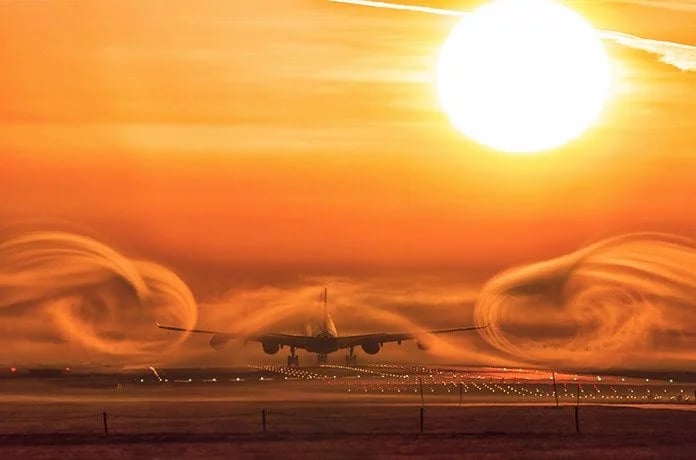
Did You Know?
Normally invisible, these vortices become visible when atmospheric conditions and lighting are just right. Here, In the image the warm sunset light highlights the swirling air, offering a rare glimpse into the invisible forces that make wake turbulence one of aviation's most important safety considerations.
Image credit: T. Harsch
SkyBriefs
Explore our sleek website template for seamless navigation.
Contact
Newsletter
+94 7720 89 539
© 2024. All rights reserved.