
Capt. Tammie Jo Shults: The Fighter Pilot Who Saved 148 Lives
A former Navy fighter pilot who saved 148 lives after a catastrophic engine failure.
6/3/20263 min read


Some pilots go their entire careers without facing a true life-or-death crisis. Others train for years, hoping they’ll never have to use their emergency skills. But on April 17, 2018, Southwest Airlines Captain Tammie Jo Shults was forced to draw on every ounce of her Navy fighter pilot training and her famous “nerves of steel.”
That day, Shults was commanding Flight 1380 from New York to Dallas when the left engine exploded at 32,000 feet. Shrapnel tore through the fuselage, shattering a window and partially sucking out a passenger. The cabin decompressed instantly. Chaos erupted.
But Shults? She didn’t panic. She got to work.
From Humble Beginnings
Tammie Jo Shults grew up dreaming of the skies on a small ranch in New Mexico. As a young girl, she watched jets streak overhead and knew exactly what she wanted to do. But in the 1980s, becoming a military pilot wasn’t a realistic option for women. That didn’t stop her from trying.
After graduating from Mid-America Nazarene University in 1983, Shults applied to the U.S. Air Force. She was rejected. The reason? She was a woman. It was a crushing blow, but she refused to let it ground her. She kept her eyes on the horizon, waiting for the rules to change.
The Journey to Success
In 1993, the U.S. Navy lifted its ban on women flying combat missions. Shults seized the opportunity immediately and joined the Navy, eventually becoming one of the first female pilots of the F/A-18 Hornet, the Navy’s premier fighter jet. Flying a supersonic aircraft off the deck of an aircraft carrier is one of the most demanding jobs in the world. Shults not only survived that world—she excelled in it, later receiving the U.S. Navy Strike/Fighter Air Medal for her service.
After leaving active duty, she transitioned to commercial aviation, joining Southwest Airlines and eventually becoming a captain. As Shults once put it, “There’s a lot of the fighter pilot mentality that works well in the airline world. You have to be ready for the unexpected.”
Overcoming Challenges
Long before the engine failed on Flight 1380, Shults had already faced and conquered a different kind of challenge. She fought institutional sexism to break into military aviation, then gender bias in the commercial cockpit, and finally, the fear that she might never achieve her dream. She kept going, step by step.
Their Greatest Achievement
On April 17, 2018, passengers on Southwest Flight 1380 heard a loud bang as the left engine exploded. Debris struck the fuselage, shattering a window. With the cabin decompressed and a passenger partially sucked out of the opening, the aircraft became a terrifying blur of wind and noise.
In the cockpit, Shults calmly radioed air traffic control to declare an emergency and request an immediate landing in Philadelphia. She kept the plane level, managed the crippled aircraft, and in a matter of minutes, brought a severely damaged Boeing 737 down onto a runway safely. She saved 148 people.
When first responders arrived on the scene, a paramedic checked Shults’ vital signs and famously remarked that she had “nerves of steel,” noting that her heart rate was remarkably controlled despite the dire circumstances. Shults later humbly told the press, “I was just doing my job. The real heroes are the first responders and the passengers who helped each other.” But the aviation world disagreed. The Guild of Air Pilots and Air Navigators awarded her its Master’s Medal, and in 2025, she was inducted into the Texas Aviation Hall of Fame for her extraordinary heroism.
What We Can Learn From Shults
Captain Tammie Jo Shults’ story isn’t just about one dramatic flight. It’s a testament to a lifetime of quiet, relentless preparation. She couldn’t control the engine that exploded that day, but she had absolutely mastered her response to the unexpected. Her life demonstrates that true courage is not the absence of fear, but the ability to act effectively in spite of it through skill, discipline, and preparation developed over years of dedication.
Whether in aviation, business, sports, or everyday life, Shults’ example reminds us that success in a crisis is often determined long before the crisis begins. The habits we build, the knowledge we gain, and the resilience we cultivate become the foundation that carries us through our most challenging moments.
This article was written for inspirational and educational purposes. For additional information about Captain Tammie Jo Shults and Southwest Flight 1380, readers may consult reports and articles from CNN, Biography.com, and the Guild of Air Pilots and Air Navigators.
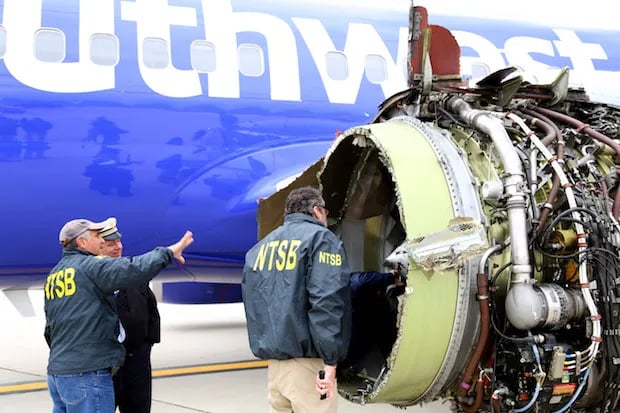
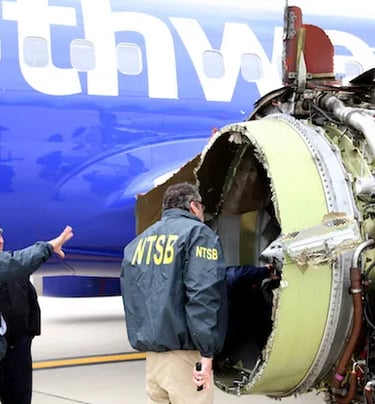
Courtesy of Linda Maloney
SkyBriefs
Explore our sleek website template for seamless navigation.
Contact
Newsletter
+94 7720 89 539
© 2024. All rights reserved.